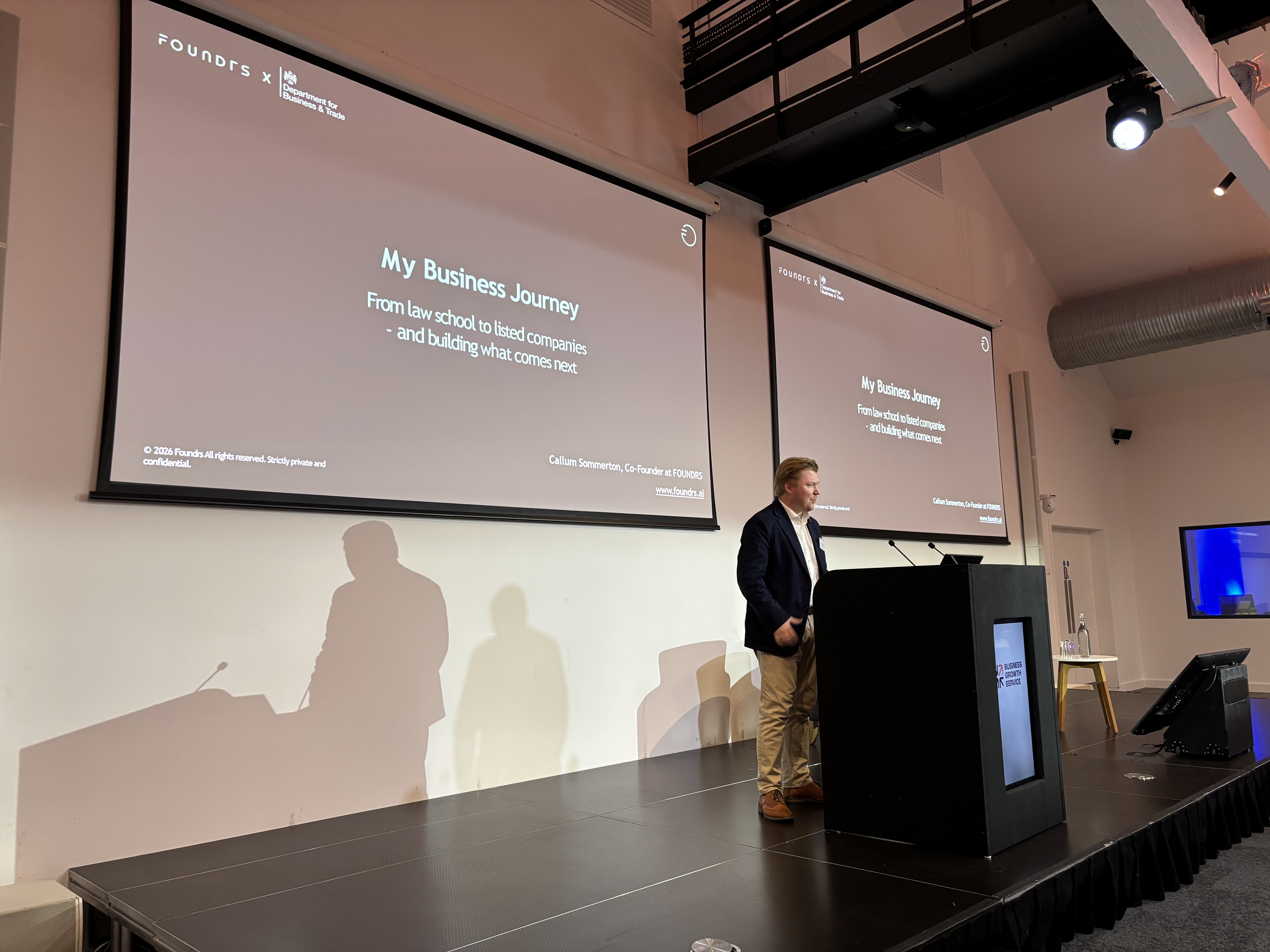
Fundraising is one of the most misunderstood parts of building a business. Most founders think it's about having the right idea at the right time. The truth is messier (and more human) than that. At a recent fireside hosted by FOUNDRS, three people who've been on both sides of the table got honest about what it actually takes. Oliver Yonchev, founder of Cocreatd, Callum Sommerton from FOUNDRS, and Roei Samuel of Connectd shared the lessons most founders learn too late. Here's what came out of the room.
1. Rejection is the price of entry
Every founder hears "no". A lot. The ones who keep going have simply decided to be less afraid of it.
Oliver's take was simple: ask more. Ask earlier. Ask people you think might say no. The rejection itself rarely damages anything - what damages you is the assumption that it will, so you never ask at all.
The founders who raise are not the ones who avoid rejection. They're the ones who've heard it so many times it's stopped meaning anything.
2. You are always fundraising
The biggest mistake founders make is treating fundraising as a campaign - something you switch on when you need money, then switch off when you close the round.
Roei was clear on this. Investors build conviction over time. The person who passes today is often writing a cheque twelve months later — because they've watched you execute, kept in touch, and gradually changed their mind.
That means the relationship starts long before the pitch. Keep building them. Especially with the people who've already said no.
3. Investors bet on founders, not just ideas
Nobody's buying your spreadsheet.
This was said plainly and it landed hard. Projections don't move money. Conviction does. Investors are asking one question underneath all the others: do I believe this person can make it happen?
Callum put it well - you need to be the most compelling person in the room. Not the loudest. Not the most polished. The one who clearly, genuinely believes in what they're building and makes everyone else believe it too.
4. Your leverage is your launchpad
Before you pitch, ask yourself: what have I already proven?
Even small proof points shift the dynamic. A handful of paying customers, a waitlist, a pilot with a recognisable name - these aren't just nice to have. They change the conversation from "could this work?" to "how fast can this scale?"
The panel were aligned on this: build traction first, then fundraise from strength. Raising from desperation is hard. Raising from momentum is a different game entirely.
5. Clarity beats complexity
If you can't explain what you do to an eight-year-old, you can't sell it to an investor.
This came up more than once. Founders who've been heads-down building often lose the ability to step back and tell a simple story. They explain the product. They cover the technical nuances. They reference the market size. And by the end, nobody knows what the business actually does.
Tell a clear story. One that anyone could understand. The investor who gets it in sixty seconds is far more likely to take the next meeting than the one who's still trying to figure out what they just heard.
A big thank you to Oliver Yonchev, Callum Sommerton, and Roei Samuel for an honest conversation. The kind that's actually useful.