Does VAT apply to you?
If you’ve just started your business, you’ve probably come across the term VAT and wondered if it applies to you. It’s one of those things every business owner hears about early on, but few people really understand at first.
The good news? It’s not as scary as it sounds.
Let’s break down what VAT actually is, when you need to register, and what it means for your new business.
What Is VAT?
VAT (Value Added Tax) is a government tax charged on most goods and services sold in the UK.
If your business is registered for VAT, you’ll:
- Add VAT to the price of your products or services when you sell them
- Collect that VAT from your customers
- Pass it on to HMRC through regular VAT returns
You can also reclaim VAT on things your business buys (like software, equipment, or supplies) as long as they’re used for business purposes.
It sounds like a lot, but in reality, VAT is just a system for tracking tax through the supply chain. You collect some, you pay some, and you report the difference.
When Do I Need to Register for VAT?
You must register for VAT if your business’s taxable turnover is more than £90,000 in a 12-month period (as of October 2025).
That total includes everything you sell that isn’t VAT exempt, not just profit.
If you expect your turnover to go over the threshold in the next 30 days alone, you also need to register straight away.
If you’re below the threshold, registration is optional and some small businesses still choose to register early (more on that later).
💡 Foundrs tip: If you’re unsure whether you need to register, we’ll help you stay on top of key thresholds and deadlines through reminders.
How VAT Works (In Plain English)
Here’s a simple example:
Let’s say you’re a web designer who charges £1,000 for a project.
If you’re VAT-registered, you add 20% VAT, so your invoice shows £1,200.
You’ll later pay that £200 to HMRC.
But if you bought a new laptop for £1,200 (including £200 VAT), you can reclaim that £200 on your next VAT return.
So in the end, you only pay HMRC the difference between what you charged and what you reclaimed.
It’s just about balancing the numbers.
The Different VAT Rates
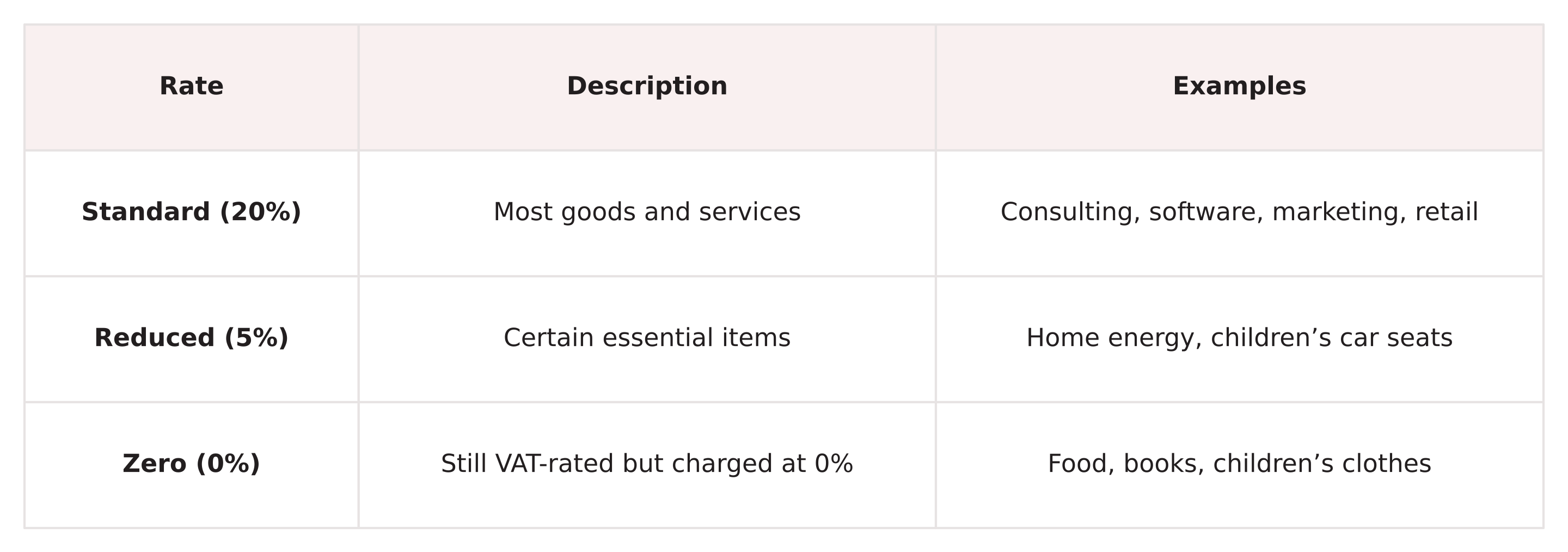
Not everything is charged at 20%.
There are three main rates in the UK - Standard, Reduced and Zero
Some goods and services are completely VAT exempt, such as education, insurance, or health services.
If your business sells a mix of these, it’s worth checking the official HMRC list or asking an accountant for advice.
When It Makes Sense to Register Early
Even if your turnover hasn’t reached £90,000, there are situations where it’s worth registering early:
- You mainly sell to other VAT registered businesses, who can reclaim the VAT you charge.
- You spend a lot on equipment or services that include VAT, registering lets you claim that back.
- You want your company to appear more established or professional, being VAT registered can sometimes help with that perception.
How to Register for VAT
You register directly with HMRC, not Companies House.
The process is done online and usually takes around 2 - 3 weeks.
You’ll need:
- Your company name and registration number
- Your business bank account details
- Details of your turnover and business activity
Once registered, HMRC will send your VAT number and details about when to file your first VAT return.
Filing VAT Returns
If you’re VAT-registered, you’ll need to submit VAT returns, usually every three months.
They show:
- The VAT you charged on your sales
- The VAT you paid on your purchases
- The total amount you owe (or can reclaim)
Most businesses now file VAT returns through Making Tax Digital (MTD) compatible software.
💡 Foundrs tip: While we don’t handle VAT filing, we can help you connect with partners and accounting tools that make the process easier.
In Short
VAT is one of those things that sounds complex, but really comes down to three key points:
- You add VAT to what you sell.
- You reclaim VAT on what you buy.
- You pay the difference to HMRC.
If your turnover hits £90,000 in a year, you’ll need to register.
Foundrs can’t register you for VAT, but we’ll keep you informed, remind you when to act, and help you stay organised as your business grows.